Written and edited by Ruby Lee Schembari
NOLA, The Big Easy and Crescent City are just a few names for New Orleans, a southern U.S. city known for its soulful culture, live music, Cajun cuisine and exquisite nightlife. It’s a place I have come to admire from afar, as I love the unorthodox nature of jazz music and the rich flavors of Creole food. However, the thought of going down south had never crossed my mind until recently, when my family began to plan a trip in the fall of 2024.
I instantly said ‘yes!’ when my grandfather told me he would be taking a train down to the Bayou State to attend the 2025 New Orleans Jazz & Heritage Festival, a 10-day cultural event with hundreds of musicians, cooks and vendors hosting upward of 400,000 visitors every year. The festival has 14 themed stages, with each one being dedicated to the Indigenous music and culture of New Orleans and wider Louisiana: blues, R&B, gospel, cajun, zydeco, Afro-Caribbean, folk, Latin, rock, rap, country and bluegrass.
The New Orleans Jazz & Heritage Festival has been showcasing groovy tunes since 1970, and was initially established as a nonprofit organization. The goal was primarily to redistribute festival funds back into the community by donating free tickets and funding educational programs such as the Tom Dent Congo Square Lecture Series and beginner music classes.
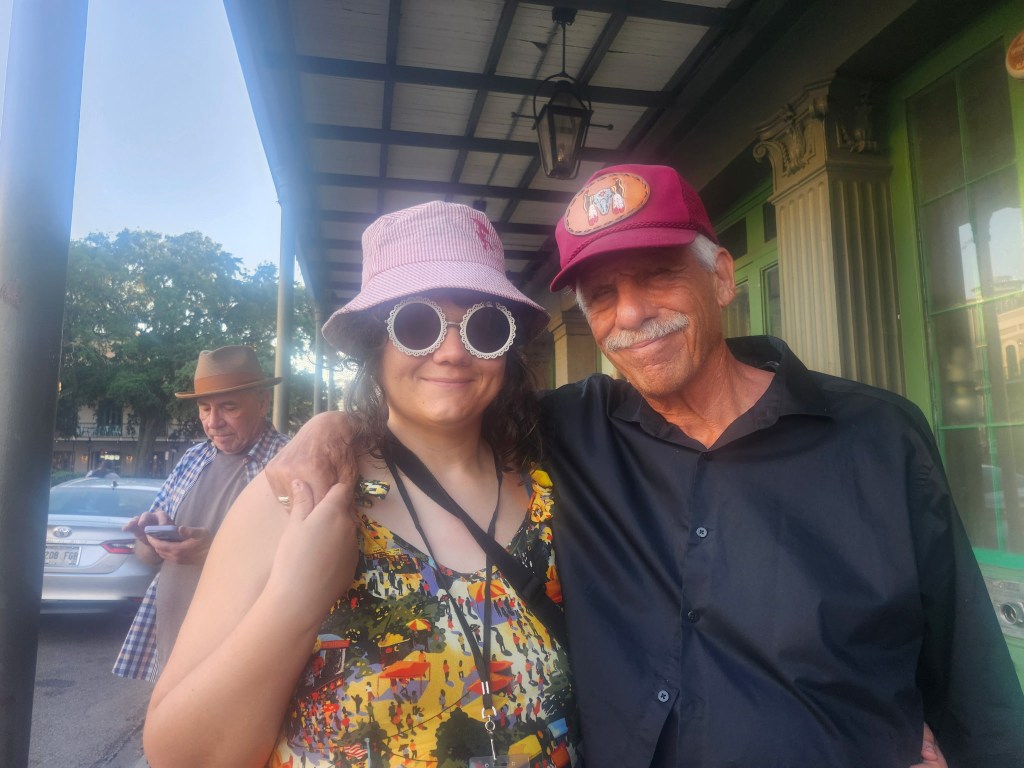
Seeing as my grandfather, Del, and I are huge fans of jazz, I was excited to spend some quality time together, with the music as our backdrop. My grandfather is best described as a patient and compassionate man, who through tense moments brings optimism and hope to the bleakest of people. He’s a tall man with bronze skin and short white hair. An often unkempt mustache can be seen on his face beneath a massive Sicilian nose, a trait we share.
The timing of this trip felt serendipitous, as my earliest memories from childhood were sitting next to him in his blue 1996 Buick Century, driving around San Francisco and listening to KCSM Jazz 91.1. At first, I loathed it. I thought it was a boring genre that was too noisy and sporadic, but as time passed and I got older, I began to surrender to the unpredictable noise of trumpets, pianos, sax and drums seeping through the car’s radio speakers and enjoyed the musical journey for what it was – creative and unpredictable. It was drives like these where I was first introduced to renowned artists like Milt Jackson, Cannonball Adderley, Miles Davis, Thelonius Monk and John Coltrane as we drove along the city streets.
While I was on board for the music and the train ride, I must admit I was nervous about leaving my soft, comfortable, relatively safe life in Santa Cruz, California, for a week-and-a-half, and stepping behind the Dixie line.
As of late, it’s been difficult for me to travel outside of California because of my gender identity as a transgender woman and fear of discrimination. Especially since President Donald Trump has made it a personal goal of his to make people like me suffer by keeping us segregated from places like bathrooms and sports, or restricting our ability to receive the care we deserve.
It’s also intimidating to travel to the state of Louisiana as a trans woman because of its historically deep red nature, which currently holds prominent GOP member and Speaker of the United States House of Representatives, Mike Johnson, who presented and supported a house bill last November, to keep trans, non-binary staff members, interns and visitors from entering a bathroom that aligns best with their gender identity.
It made me wonder if I’d be safe visiting that state with people like Johnson representing Louisiana, accompanied by known stereotypes of southerners being abhorrently ignorant. I was anxious to interact with the residents of NOLA because I am trans.
My adventure to the south started early in the morning of April 23 in San Francisco. It was about 4 a.m. when I was greeted by my tiny orange cat trilling and chirping at me. “What do you want?” I asked, barely half awake. Through the predawn darkness, I could see his orange and white face staring blankly at me, with one of his sweet little smiles. He meowed back in response, but I felt this wasn’t a matter of wanting something other than some attention, as he is a pure and straightforward boy. I rolled over onto my right side to try to go back to sleep, but as my eyes closed, I felt him leap from my bed and onto the windowsill. He sat there for a few moments in silence, then once he had established his position, he began making little grunts and groans as the early rising birds began to sing and fly, waiting for the sun to rise.
At some point, despite my fuzzy friend’s intervention, I fell back to sleep, but was soon woken up by the sound of my 6 a.m. alarm blaring around my room. After about 15 minutes of sitting alone in the darkness to gather my surroundings, I finally got up and prepared for the long day of travel that was ahead of me: we had to catch a train to Los Angeles, before the cross-country fun began.
When I stepped outside to load my luggage into my Grandfather’s 2013 Ford C-Max, I was greeted by a traditional cold and foggy Bay Area morning, which I’ve never become accustomed to despite growing up with this weather. It’s the type of weather that, regardless of how many layers you wear, the cold fog manages to linger and find a way to freeze your soul.
By the time the car was loaded and we were ready to go, it was around 7:15 a.m., and I was already feeling tired and groggy even though we hadn’t even left for LA yet. But despite my low energy, I was ready for what was coming. By 7:20, my grandfather and I were cruising down Interstate-280 towards downtown San Francisco, blaring whatever might have been playing on 91.1 KCSM for old times’ sake. Outside my window were rows of colorfully painted houses nestled along the rolling hills of the 49-square-mile city, amidst a sea of grey sky.
It was 7:45 when we pulled into the small Amtrak station in Emeryville. The inside of the station looked like a tiny airport terminal with rows of seated people waiting to board their trains. It was a lively scene inside the station, with people strewn about the terminal idly burning time until their departures. Some were murmuring, minding their own business, while others made sure to let their presence be known: one man, initially muttering gibberish to himself, began talking aimlessly to anyone within proximity to hear. He began to shake, cower and dart back and forth as if being threatened by an invisible force. At some point during this impromptu performance, he took out his phone and began to show people some of his photos.
“This is my mom from 1947. Isn’t she pretty?” the man asked as he flashed strangers the black and white photo. I sat there, unsure of what to say or do. “She’s gorgeous,” an older Black woman said to the man. After a few moments of bizarre banter between the two, the curious man was interrupted by the PA system announcing that Train 6 to the Central Valley was ready to board and leaving in 15 minutes. The man quickly stood up, put his phone away, and walked out of the station to the boarding area, never to be seen again.
After a short while, the PA system announced that Train 11 heading to Los Angeles was ready to board. My grandfather and I shot up and raced to the platform, hoping to get on the train as soon as possible, but when we stepped outside, the train was nowhere to be seen. It took another 10 minutes for the train to slowly crawl down the tracks to meet us. When we could finally lumber onto the Coastal Starlight train to Los Angeles, I was so relieved because of how warm and comfortable it was inside the vessel, compared to the cold Grey Area* morning.
The rest of the morning on the train was a slow, torturous crawl until the dining cart announced that breakfast was ready to be served. Passengers, including myself, marched to the dining cart for our first meal of the day aboard the train. When I reached my table, I tossed myself into my seat, hunched over the table, exhausted and miserable, waiting for the waiter to come.
I must’ve been half asleep because it took me a while to realize someone was sitting across from me for 10 minutes. I never caught her name, but once the coffee began to flow, she began to open up a bit. She was coming from Humboldt and was on her way to visit her sister in Maricopa County, Arizona. Oddly enough, last year, in 2024, a small unincorporated community within Maricopa County, known as the Rio Verde Foothills, was all over the news because it began to run out of water in the middle of the desert. I remember being very invested in this story because it related to my interest in Urban Exploring* and how it seemed like Rio Verde was about to die and become a ghost town*.
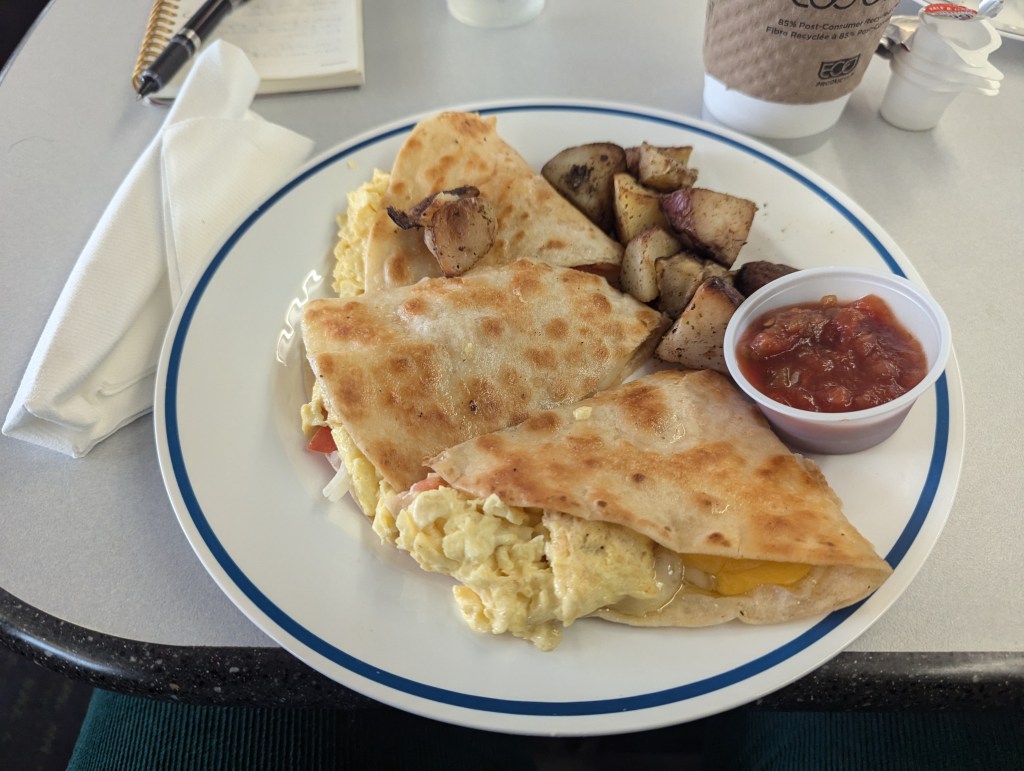
When it was time to order our food, I ordered a breakfast quesadilla stuffed with fluffy scrambled eggs and cheddar cheese with a side of bacon. The meal’s presentation was good, as it looked very appetizing with its flaky, crusty, buttery-looking tortilla, melty cheese, and crispy thin bacon strips. However, despite its presentation, the food was bland and lacked any sense of flavor character. The bacon was chewy, but the taste was on point with hints of salt and smoke. The best part of the meal was the country potatoes, which were pan-fried and lightly doused in olive oil, herbs and spices. Overall, a decent train meal.
As I was eating, I could hear two railroad workers behind me talking about an old coworker named Roman, who supposedly had a grand, old western-style standoff in the dining cart with a staff member nicknamed “Eggy”.
Now I have no idea who they are or why they were called Eggy, but according to one of the workers, the confrontation started when Eggy was carrying a large mound of dishes through the narrow walkway of the dining cart and bumped into Roman, causing a massive mess of leftover food and broken glass. I’m not sure how the showdown unraveled, as the workers began talking quietly as more people walked into the dining cart and my eavesdropping came to an end. However, we can all probably guess what happened between the two men.
After finishing my meal, I excused myself from the table and retreated into the small roomette I was sharing with my Grandpa. It was a small room, no wider than a broom closet, with two bunk beds stacked on top of each other. I threw my stuff down, drew the curtains to a close, and hid in the darkness for a few hours. At some point, I grew curious about what was outside my window, and when I opened the curtain, I was not disappointed by the view on the other side.
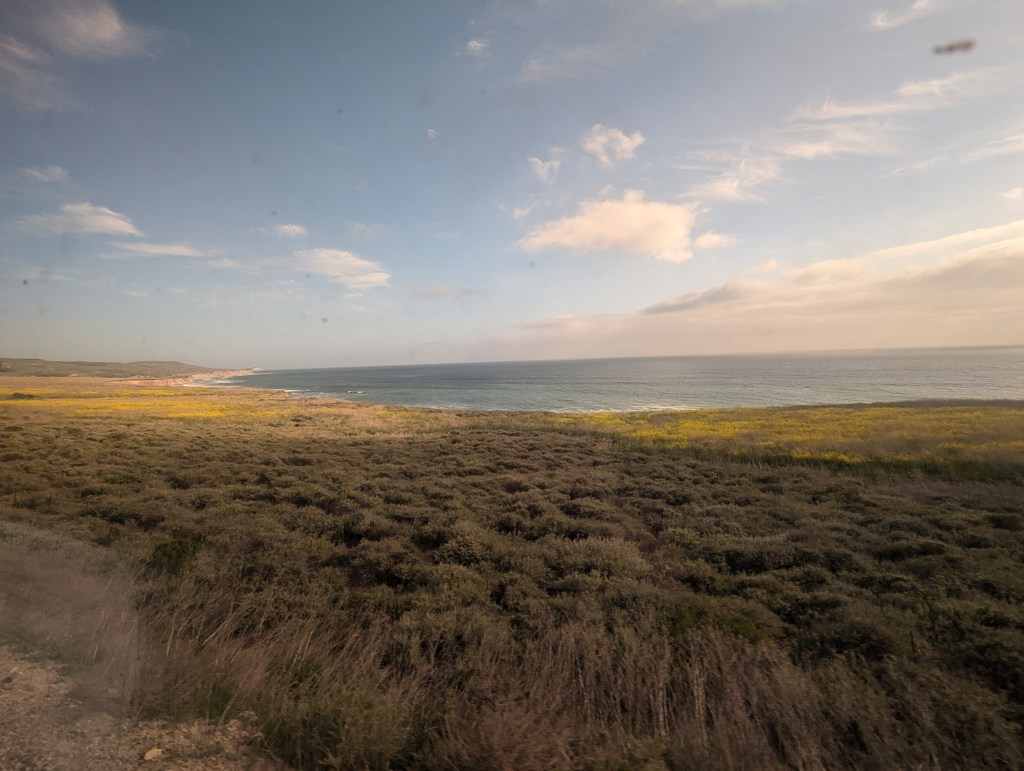
The blue Southern California ocean glistened vibrantly in the sun like a diamond as we cruised along train tracks next to Highway 101 towards Los Angeles. Based on the stunning coastal landscape, we were near Santa Barbara, along with the mission-inspired homes plastered up, down and along the tracks.
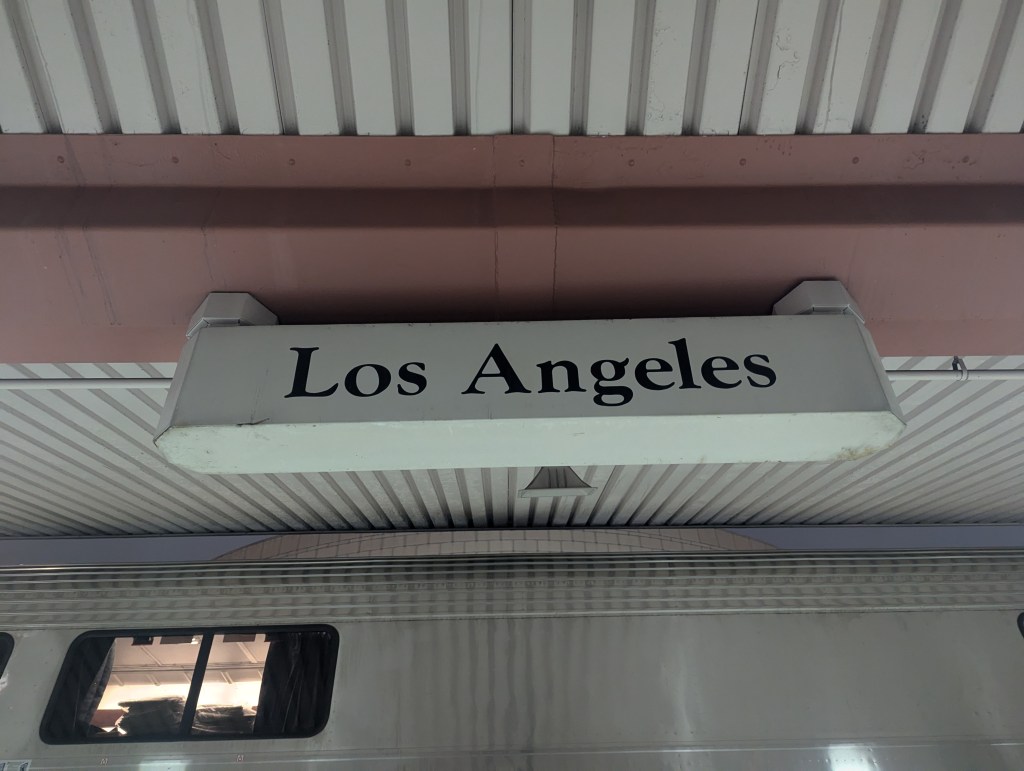
By the time the sun set, we were just outside of Union Station in Los Angeles, and from my window the city glimmered like a million stars in a sea of black. In the middle of the city chaos was the U.S. Bank Tower, which cut through the night sky like a dagger of blazing fire. Despite my loathing of Los Angeles, with its crowds and the overall disgust I feel when visiting it, I must admit that the city is a spectacle from afar.
When my grandfather and I got off the train at Union Station, it was like stepping into a panic of lost and confused travelers scrambling to find which platform to go to. It was a loud scene, with train brakes hissing, people yelping, and conductors yelling “All aboard.” It was an overwhelming type of chaos that requires a particular kind of calmness and grit to withstand comfortably, a quality I don’t possess.
When we found our train car, I was ready to drop like a ton of bricks onto the tiny bottom bed and sleep. My body was stiff, my broken ankle was swelling, and I wanted nothing more than to be at home on my couch smoking some hashish*. But alas, this was just the beginning of a long, strange trip.
According to Oxford Languages, the definition of ghost town is a deserted town with few or no remaining inhabitants.
Urban Exploring is a recreational activity focused on discovering and exploring abandoned buildings, houses, and other points of interest.
According to Oxford Languages, hashish is an extract of the cannabis plant, containing concentrations of the psychoactive resins.
I plopped down on the train bed and closed my eyes, succumbing to the exhaustion that held onto me.
I never like to be woken up abruptly, especially when I didn’t sleep well the night prior. But I was lifted from a dream when I heard the PA System say, “Good Morning, and welcome to Arizona. The time is 5:30 AM, and we will reach Tucson in about 25 minutes.” My eyes shot wide open at the announcement and in a hazy state of mind, I lurched toward the window curtain and threw it to the side, revealing a bright and blinding Southwestern sun on the other side. When the light hit my eyes, I lunged back and shielded them from the brightness, waiting for the stinging to stop and for my eyes to adjust. After a few moments of cowering in the dark with my eyes covered, I sat up and lightly punched the bottom of the top bunk to wake my Grandpa up.
“G, it’s morning, and we’re in Tucson,” I said groggily. “Hmmm,” he groaned. From then until breakfast, everything felt blurry and out of place, a feeling I am most familiar with when I don’t have caffeine in my system.
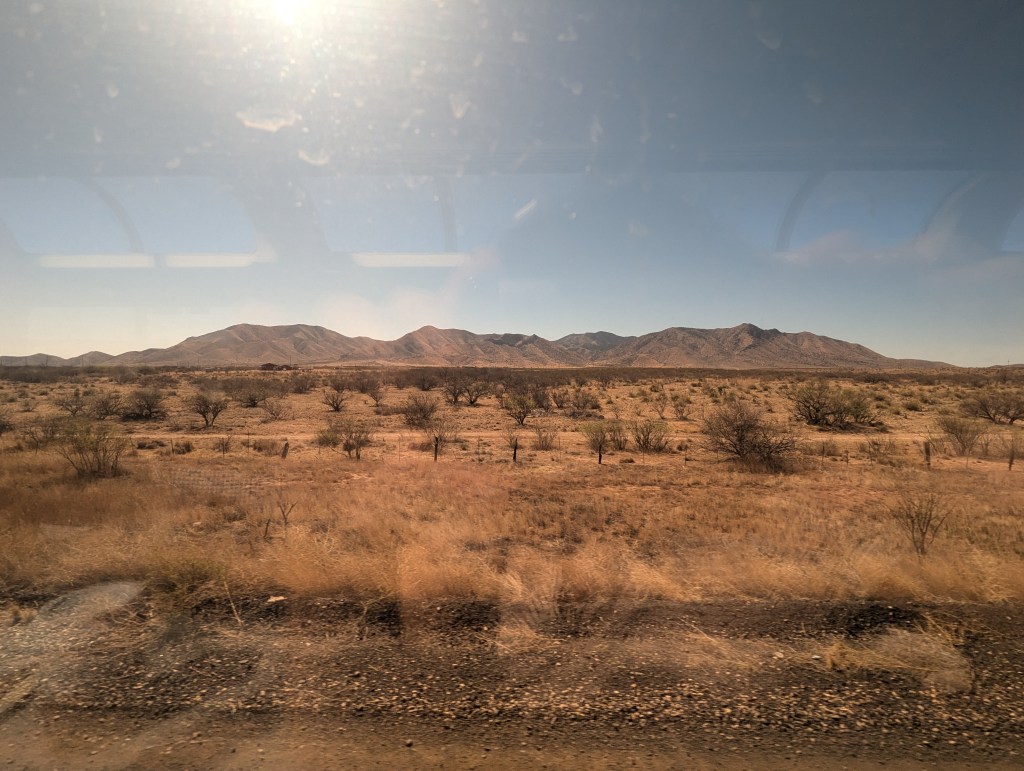
I ordered the same food as the day prior, as the breakfast, lunch, and dinner menus don’t change on the train regardless of the day. After eating my breakfast like a savage animal and slurping down two cups of bitter coffee, I found myself sitting in the observation car, which was wide and had large glass windows that curved up onto the roof. For most of the day, I looked and admired the badlands of New Mexico and Texas, holding hundreds of miles of wild and untamed land of America. In the distance lay ancient jagged mountains and lush green cactuses painted on top of a background of hot sand, making it a land of no gods or masters.
It was really relaxing to be able to sit in the observation car all day and observe the change in the American scenery passing me by at 75 mph. This, in my opinion, was the one saving grace of taking the train.
However, by afternoon, the appeal of taking Amtrak quickly wore off when the train came to a sudden and screeching halt. The smell of burning rubber permeated throughout the observation car, and large dust clouds whipped into a frenzy outside. Everyone inside the vehicle looked around frantically, conspiring about what had happened. “We hit someone,” an older lady yelped nervously. “No, no, no, we hit a cow, I saw it all happen,” said a balding middle-aged white man in a red button-up shirt.
According to an article by KFOX14, our train, the Sunset Limited, had accidentally hit a car at about 4:18 PM on Thursday, April 24th, outside Clint, a small town in El Paso County, Texas. So far, no injuries had been reported*.
Little did I know that this accident would set our whole journey back by nearly six hours. For five and a half hours, our train sat idle on the track in the middle of a dusty, hot, and dry dirt lot outside of the little desert town. The red-hot Texas sun beamed through the glass ceiling of the observation car, making it feel like a sun-powered sauna that grew warmer and humid by the minute. Occasionally, the air conditioner would kick on to cool the train off, but at one point it was off for about an hour straight, making for the most miserable hour of my 2025 so far.
Yet to our luck, the train didn’t start moving again until about 11:00 p.m. that night.
The last time the KFOX14 article was updated was April 24th 2025 @ 6:23 PM
The third and final day on the train started horribly as I was jerked out of a peaceful sleep at 3:00 AM yet again by the PA system announcing that the train was about to approach Alpine, Texas. Pissed and exhausted, I rolled on my back and stared into the darkness until I fell back asleep.
Everything was dark and quiet before being woken up by my Grandfather at 7:06 AM to tell me it’s time for breakfast. “Alright, I’ll meet you there,” I murmured as he shuffled out of our tiny room. Groggy and mad I sat up in the bottom bunk and slowly dressed myself.
Before I even had my morning coffee, I could tell I wouldn’t be in a good mood. When I plopped down into my seat in the dining car, my grandfather looked over at me and asked, “How did you sleep?”
I knew his intentions were pure, but I got a little snippy given how tired I was. “Fan-fucking-tastic, I love being woken up at 3 AM to be told that we’re arriving at a train station that I’m not getting off at,” I replied. He chuckled at my response, knowing that was probably the most positive I would be on the train. It wasn’t his fault, as I chose to come . But given the delay we had the day prior, and the conductor telling us we wouldn’t be getting to New Orleans until past midnight, I couldn’t help but feel grumpy.
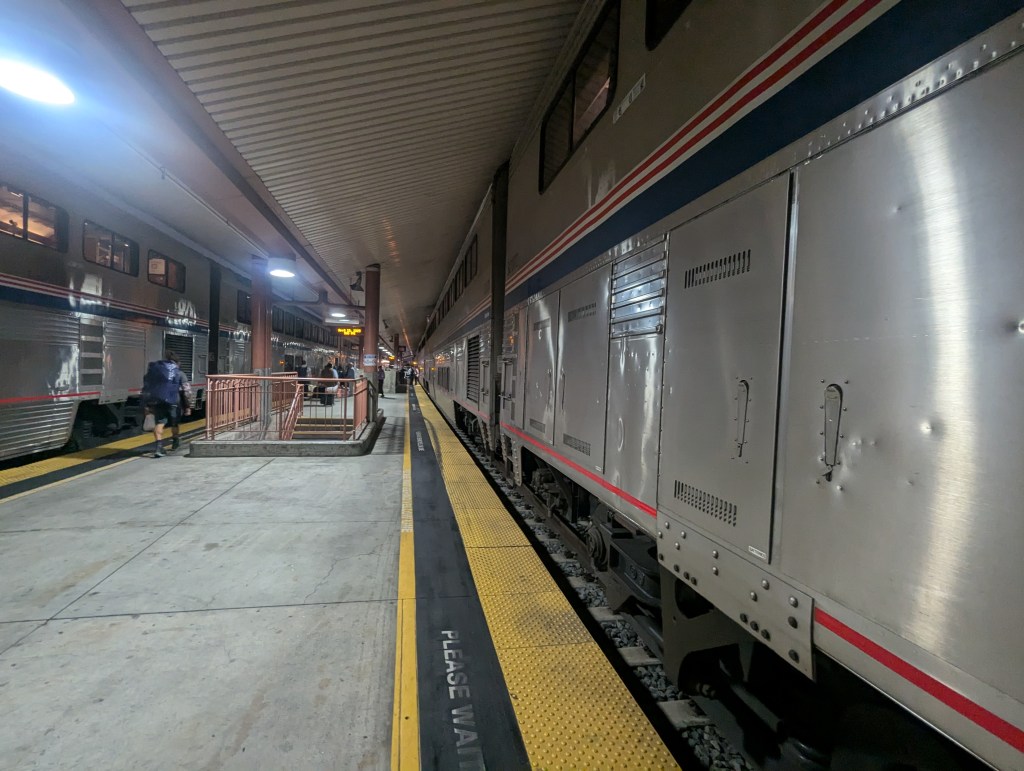
Every hour that passed on the third day was a small victory, adding up to one big celebration by the time the train stopped at 1:30 AM.
The hardest part of the journey was over, and alas, the humid night air supplied ample breaths of freedom as moths danced feverishly in the humid moonlight.
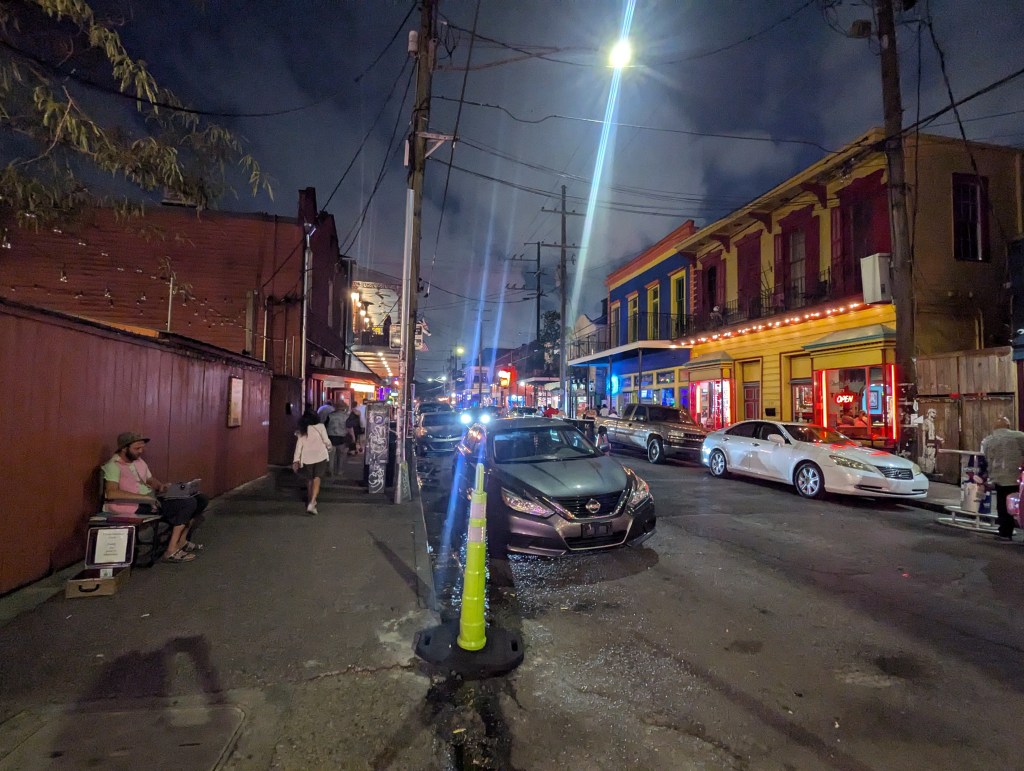
By the time we had checked into our hotel room, it was 2 in the morning. Filthy from not being able to bathe for nearly four days, I rushed to the shower once the door swung open.
I could feel the sweat and grime wash away as the warm water caressed my skin, making for what felt like a ceremonial bathing to wash away the stress of being locked in a hot jittering tube for 84 hours.
Overall, I must admit that I didn’t like taking the train because of how cramped it felt inside of the cars. I also disliked how much the train cars shake, wiggle, and jump.
My advice for anyone curious about taking Amtrak is to take it slow and don’t do large stretches of travel at a time, as you’re never quite sure when the train might break down and leave you sitting in the middle of Nowhere, USA*.
There is an unincorporated community in Caddo County, Oklahoma, called Nowhere
When I awoke the following morning, it was like waking up from a long, hot, and uncomfortably claustrophobic dream that ended the moment my eyes opened.
Our morning started slowly as we crawled into a small but artsy bar called The Den around 11 AM for food, shade, and drinks. For breakfast, I ordered a Cuban sandwich and a pint of Pabst Blue Ribbon, which is not something I would typically order this early in the day, but when in The Big Easy, do as the locals do.
After wolfing down my sandwich and guzzling my beer, I started talking to the bartender, a young Black woman dressed in a skintight, all-black gothic style outfit with a beautiful head of black and white dyed hair. During our conversation, she revealed that she was originally from New York, and when asked what brought her to The Big Easy, she chuckled and said, “Bad parents.”
Once my grandfather paid the bill, and it was time to leave, I asked the woman if she knew where one could procure some Marijuana, as I didn’t want to attend Jazz Fest without a little buzz. “Well, darling, today is your lucky day,” she said as she reached for her bag, pulled out a tin of pink joints, and handed me one. “Wow, thank you, how much do I owe you?” I asked. She smiled at me and said, “Don’t worry about it, you have fun now, you hear?”
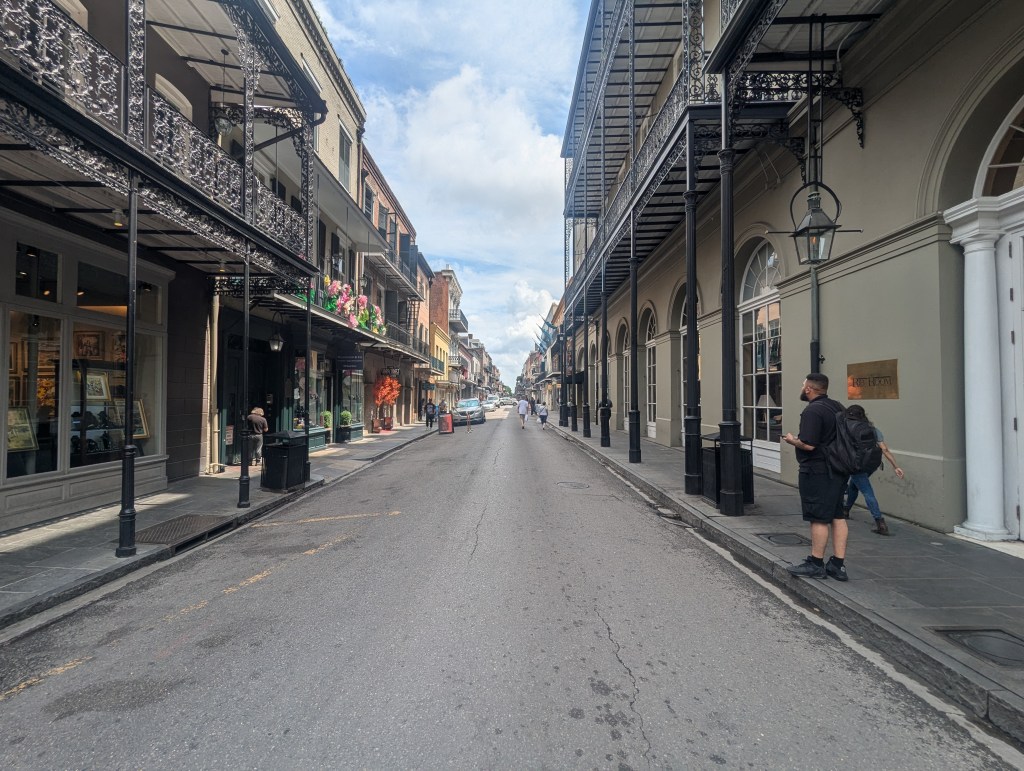
When we stepped out onto the sidewalk, the crusty New Orleans street hummed with the traffic of cabs and locals. My grandfather threw up his hand to hail a cab, eventually capturing the attention of a driver. When the cab pulled up to the curb, the driver rolled down his window and said, “Where are y’all headed?”.
“Jazz Fest, we need a ride to the fairgrounds,” My grandfather said. “Alright, hop in,” the driver said.
It took only about 10 minutes to get outside of the fairgrounds, but as we grew closer the streets became flooded with squad cars, taxis, and festival goers. It felt like we were driving an inch per minute, and by the time 5 minutes had passed, we figured it would be faster to walk to the gate. We paid the cab driver, hopped out on the bustling street of Gentilly, and joined the crowd as we funneled into the festival.
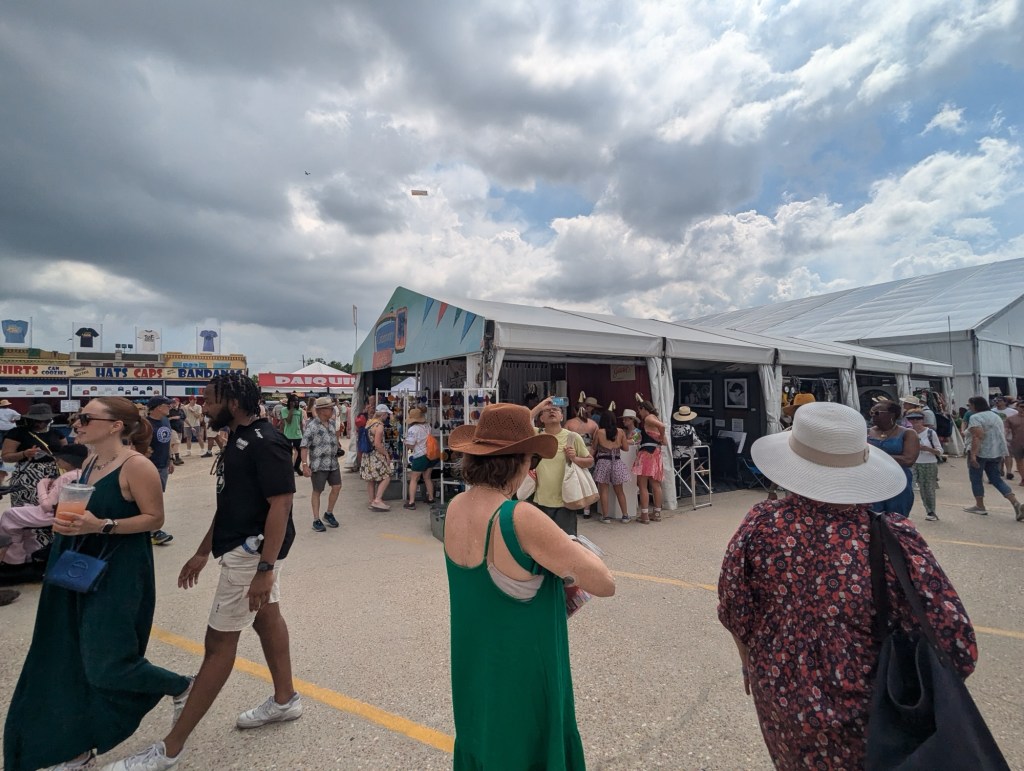
Inside the fairgrounds were even more swarms of people walking every which way to follow the music that made their bodies groove. In the air lingered the scent of dirty fry oil, pungent marijuana, and the sweet fragrances of rose water.
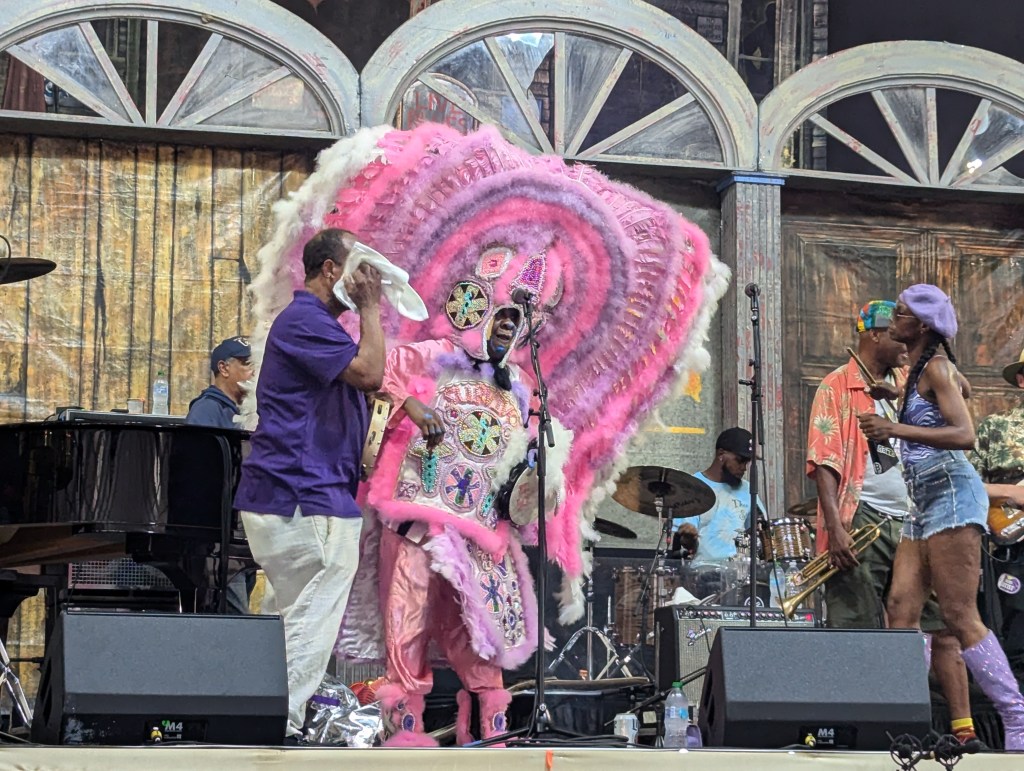
Knowing I couldn’t walk long distances with my broken ankle, we slowly walked to the Paralyzed Veterans of America booth, where we met a colorful man by the name of Perry who had gorgeous blue eyes that shone like freshly cut sapphires.
“Well, how y’all folks doing on this fine spring day?” he asked with a wide grin. We, being people of the north, are not so used to such friendly folk, especially since we come from a much more socially reserved environment. “We’re fine, we’re here to get a wheelchair for my granddaughter,” my grandpa said.
Perry smiled and said, “Alright, perfect. All I need is for you to fill out this form and your driver’s license.”
After my grandfather filled out the appropriate paperwork and left his ID, we were well on our way to explore what the festival had to offer. Unsure of where to go first, we decided to roll over to the Gospel tent because of how close it was to the entrance.
Inside the Gospel tent were hundreds of people gathered around a large church inspired stage that held New Orleans’ oldest gospel jazz group, the Zion Harmonizers, which was established in 1938. Their music buzzed with a sense of spiritual energy as the lead singer sang at the top of his lungs, reaching ranges I wasn’t sure a man his age could reach. But as the group played on, dozens of people rushed out of their seats to dance in front of the stage like it was a Grateful Dead show.
It was a rather nice experience to see so many different types of people enjoying themselves and sharing a space regardless of the differences among them.
As the band was nearing the end of their act, the lead singer, Brazella Earl Briscoe Sr., came down from the stage and began singing right in front of the crowd of dancing people. When I noticed how close he was to them, I stood up and shuffled over there as fast as I could. When I reached him, he stuck out his hand and I shook it with a great sense of honor, well worth the ankle pain if you ask me.
With the closing of the Zion Harmonizers act, the crowd roared with enthusiastic cheers as they spilled out of the tent and onto the hot open court that was cooking in the high noon sun.
With 25 minutes to go until we could see Marcia Ball, an American blues singer and pianist, playing in the blues tent, we were caught in the midday sun without shade or water.
In the distance was a man with a beer cart yelling, “Ice cold beer here! Coors, Miller, Blue Moon, we got it, folks.”
Thirsty and looking for a way to cool off, I called the man over to order two beers. I ordered two beers: a Blue Moon for my Grandpa and a Coors Banquet for me, totaling $18.27 with tax.
Before cracking open my beer, I decided to take a couple of hits off my pink joint to get into the mood for the next act, as being in the right headspace is an important part of seeing music.
This sensation is best described in the intro to America’s Most Blunted by Madvillian, which goes “Listening to music while stoned is a whole new world. Most cannabis consumers report it second only to sex, and grass will change your musical habits for the better…”
Even though I had never listened to Ball’s music before and I was excited to experience it live. When her set came on, I was blown away by how in tune the band seemed to be with her every note and lyric. Even though Ms.Ball was 76 years old, she still had an amazing singing voice that amplified her piano chords, which kept the crowds dancing with joy.
With Ball’s set coming to a close at about 5 PM, it was time for us to make our way over to the Festival Stage to see a dual performance with Philadelphia-based rap collective, The Roots, and the NOLA rap legend Lil Wayne. While I was excited for their performance and to smoke a little weed during the show, I was not excited to roll my way over to their set. Between the bumpy, uneven roads and the swarms of unaware festival goers, it was a struggle to move around.
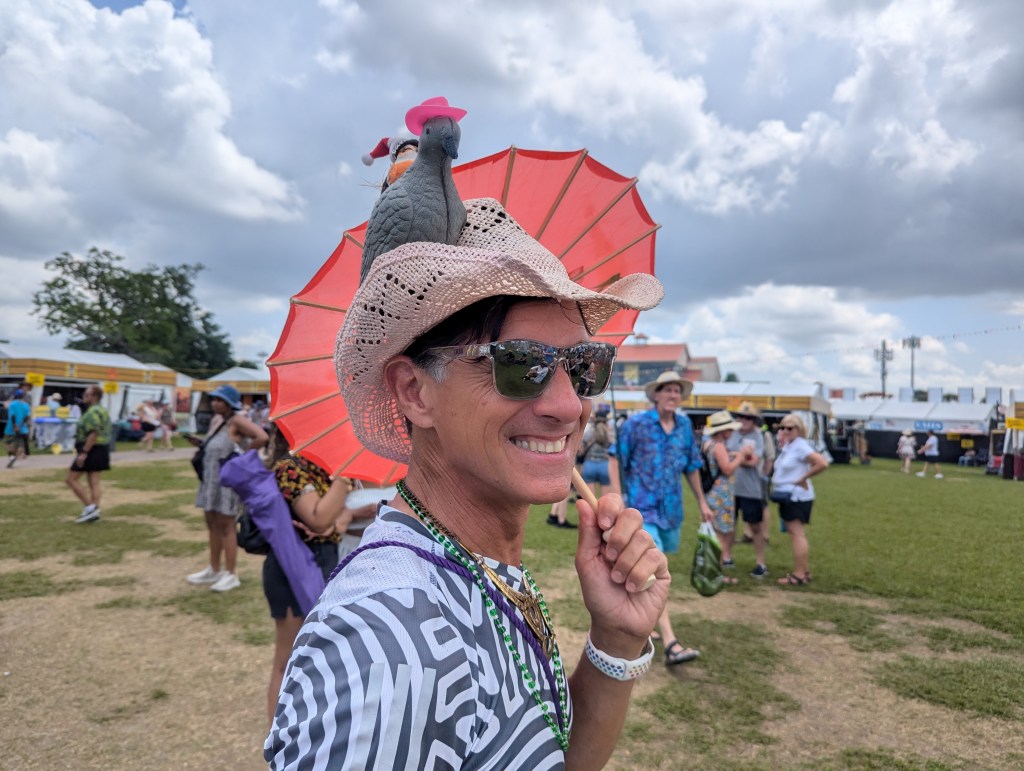
As I was pushing my way through the mess of people, I spotted a group of teenage girls passing around a dime bag of cocaine out in the open. After about a line each, the girls began to cackle like red-eyed hyenas, gnashing at each other as they fought for the leftover residue from the bag to rub onto their gums. Something I realized while I was pushing myself around in my wheelchair was how open and encouraged drug use is at the festival. As a marijuana lover, this didn’t bother me. I enjoyed the fact that I could spark up and no one batted an eye, especially in a red state.
When I reached the Festival Stage, I was guided to sit in the American Disability Act (ADA) seating by event staff because of my broken ankle, but to my surprise, it was atop a large and steep ramp. Rolling up the ramp was like climbing up a mountain and looking over the top. From atop the desolate platform, we could see hundreds of festival goers waiting for The Roots and Lil Wayne to come on. Above them was a thick veil of weed smoke that stayed present for the majority of the show.
While I think that the ADA seating was in a convenient location, it would have been nice to be able to see the stage a little better, as where we were sitting was skewed to the left of the stage, forcing us to watch the show on the screen.
When Tariq “Black Thought” Trotter ran out onto the stage and began spitting bars over the sounds of horns, a sousaphone, and the energetic riffs of electric guitar played by “Captain” Kirk Douglas, the crowd went ballistic with frantic screams as I observed quietly from a distance.
I had never listened to their music before, but after my ears were gifted with the beautiful sounds of their funky hip-hop style, I knew I had to get some more. It was like my mind had gained access to an all-you-can-eat soul music buffet, with Questlove, Black Thought, and “Captain” Kirk Douglas as the chefs of this soul kitchen.
I regret not taking any photos or videos of their performance, but at the same time, it was one of those opportunities that I just wanted to enjoy at the moment, and within that moment, I found myself getting loose with the funk by lightly dancing in my wheelchair.
With the conclusion of The Roots’ solo performance, Lil Wayne appeared on stage at 6:13 PM in a black tracksuit, shredding on his Eddie Van Halen Guitar like an ’80s hair-metal star with a blunt in his mouth. After playing a few chords and singing a few lines from one of his hit songs, “Mr. Carter”, Weezy handed off his guitar and said:
“Ladies and gentlemen, can you please say hi to my people before we go any further?” The crowd screamed in response.
“We appreciate that. Now before I get started, I must let you know three important things about myself: Number one is, I know that we all ain’t shit without each other. You dig?” Weezy said.
“Number two is, I know that I ain’t shit without you, you dig?” he added. “Number three is very important. If you don’t remember shit about today, please remember I ain’t shit without you.”
He continued on by saying: “If you came to have a hell of a motherfucking time say hell yeah!” The crowd instantly screamed “HELL YEAH” back to him.
“If you already are having a hell of a motherfucking time say fuck yeah!” Weezy said with a wide smile.
The crowd, with all of its might, screamed “FUCK YEAH” as enthusiastically as possible. I found myself smiling at this silly yet wholesome interaction with the crowd because of the lighthearted back-and-forth banter. But with the energy of the crowd buzzing with excitement, Weezy kicked off his show strong with The Roots setting the structure of the performance. He performed upwards of 20 songs, which included tracks like “Fireman,” “I’m Going In,” “Single,” and “Lollipop.”
With only 20 or so minutes until the end of Lil Wayne’s act, my grandfather and I tried to rush to see the end of Harry Connick Jr.’s performance at the Gentilly Stage. However, despite our efforts to dodge and weave through the human traffic, we made it just a few minutes late and caught the tail end of him playing his final song.
Bummed and hungry, we decided it was time to meet my Aunt Lynn from Oakland for dinner at a classic Cajun restaurant in the French Quarter that she chose: Tujague’s. My Aunt Lynn and I have an unorthodox relationship, as our bond is more like siblings than a typical aunt-niece dynamic. She’s a tiny yet feisty woman who, when prodded, could be a fierce opponent when debating.
When we exited the festival at 6:30, Gentilly Street had become a mess with swarms of people walking every which way, as a small army of police officers navigated cars through the foot traffic.
The air was heavy with late-day heat and the sounds of a local brass band playing out on the busy street. Around them, hundreds of people gathered to observe the show as they searched for a cab to whisk them away.
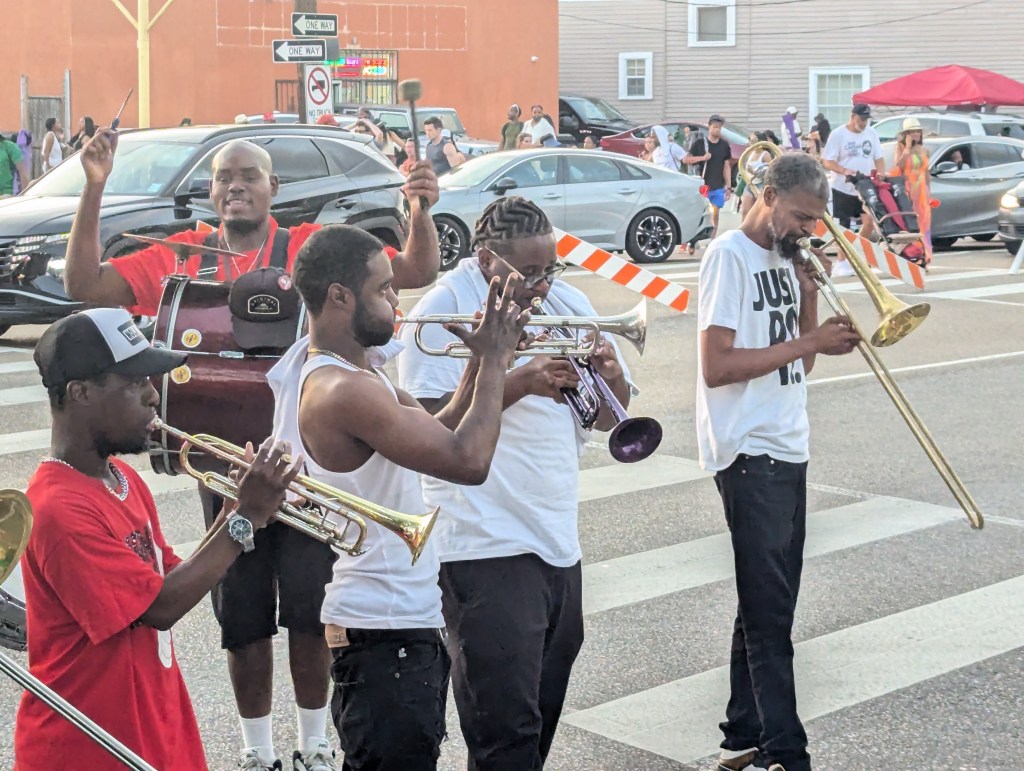
Figuring it might take a while to get a cab, I began to settle into the present moment of chaos around me and observe the stream of people rushing past like a whitewater rapid. Those that stuck out amongst the throngs of people moved like salmon, as if they were trying to make their way upriver. One particular specimen of a salmon man was dragging an ice chest filled with loose beers and half a bottle of Crown Royal.
“Five-dollars for a cold beer, one-dollar shots of crown,” he called out as he dragged his cooler past me.
He was one of many street vendors on Gentilly Street, as up and down the block, families had set up shops in front of their homes, hoping to squeeze a little cash out of festival goers.
Street vendors are not a rare sight in New Orleans; in fact, every Sunday people gather underneath the I-10 to sell food and alcohol without permits. It goes largely undisturbed by city officials and the police, perhaps as a show of support for local businesses or individuals just trying to get by.
By the time we had gotten a cab, an hour and a half had passed. When we got situated inside the cab, the driver asked, “Where are you headed?”
“Tujague’s on Decatur,” my grandfather said.
“Oh, you’re going to Tujague’s? Didn’t know they had one of those out there,” the driver said. He was an elderly Black man with a flat cap on his head. While he was a friendly and talkative fellow, I couldn’t help but notice how bad of a driver he was as he ran red lights and merged into lanes without using his blinker.
I was tempted to bargain with the man for a lower price, given that he drove like a madman. However, to his credit he did get us to the restaurant a few minutes earlier than expected, thanks to his reckless driving.
Upon entering Tujague’s, we could see my Aunt Lynn sitting at the bar scrolling through her phone as she waited for us. It had been a while since I last saw her, since I don’t bother going to family functions most of the time, but it was nice to see a familiar face in a somewhat foreign land.
We were seated almost instantly, and upon sitting we were already being asked what we wanted to drink. My grandfather, in typical Schembari fashion, ordered a gin martini, a drink he and my grandmother had shared often before she passed in the fall of 2022.
For myself, I ordered a classic French Quarter cocktail called The Hurricane which consisted of rum, lemon juice, and passion fruit syrup with an orange slice on the rim. It was a sweet concoction and, unfortunately, the best part of the entire meal as the Gumbo I ordered wasn’t very good – disappointing indeed after such a long day at the festival.
It had all of the right flavors of a quality Gumbo, and had the potential to be delicious if the rice it was paired with wasn’t undercooked. Another issue I had was the price for the portion I got. It was $15 for about 12 fluid ounces of Gumbo, and one cup of undercooked rice. Overall, not worth it in my opinion.
With dinner and drinks over, we decided it was time to head to the Airbnb we planned to stay at for the entire trip, about a 10-minute Uber ride from the French Quarter. It was a tiny grey shotgun-style home located on Fourth Street just a few blocks outside of the Garden District, a nice neighborhood with massive southern-style mansions and lavish gardens.
As my family settled into our temporary home, I snuck out to the backyard in search of some silence. I stood there in the darkness, gazing out at the clear, starry night sky, anticipating what was to come next in New Orleans, a sinking gem of despair.
This concludes part 1.
♦
 ♦RubyLeeSchembari.blog♦
Leave a comment